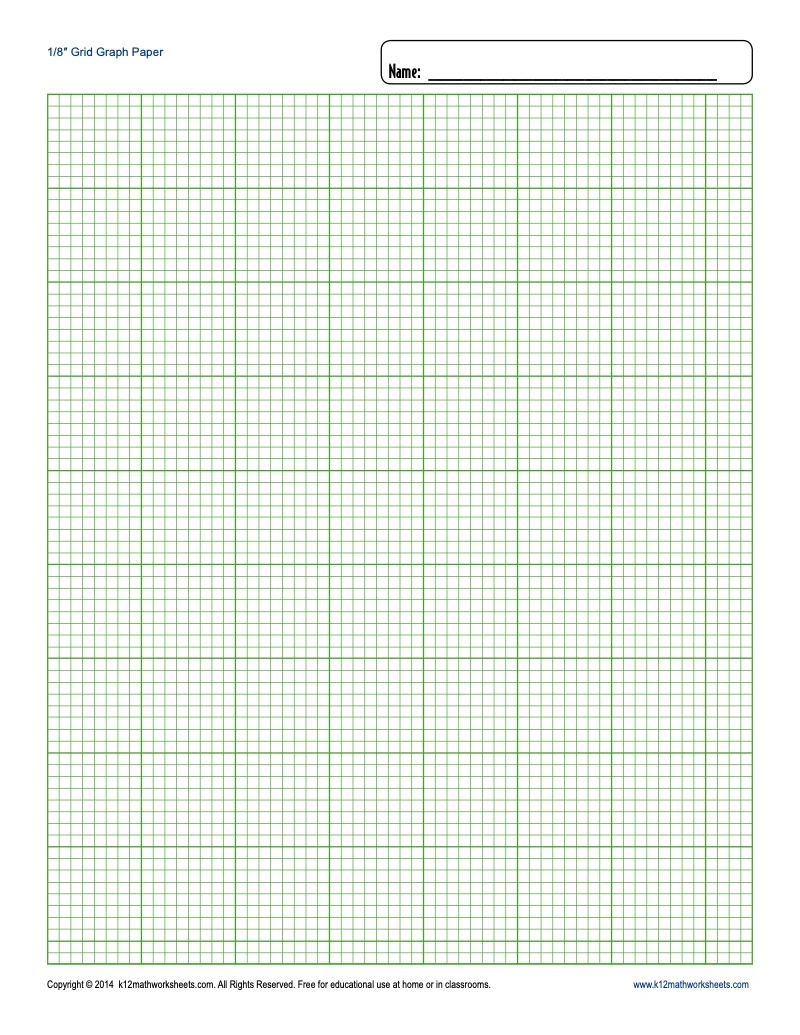
Graph paper is an essential tool for children, aiding in the development of mathematical skills and fostering creativity. Its structured grid layout allows kids to visualize concepts, making it ideal for a variety of educational activities, from math exercises to artistic projects. Printable graph paper provides a convenient resource for parents and educators looking to enhance learning experiences at home or in the classroom.
Benefits of Using Graph Paper for Kids
Using graph paper offers numerous educational advantages:
- Improves Spatial Awareness: Graph paper helps children understand spatial relationships and dimensions, which are crucial in geometry.
- Enhances Organizational Skills: The grid format encourages neatness and organization in both math problems and artistic designs.
- Aids in Geometry Learning: It provides a visual aid for plotting points, drawing shapes, and understanding coordinates.
In addition to its educational benefits, graph paper can spark creativity. Kids can use it to design patterns, create pixel art, or even plan out their own games. This blend of learning and play makes graph paper a versatile tool in any child’s educational toolkit.
Types of Graph Paper Available for Download
There are various styles of graph paper available for free download:
- Standard Grid: Ideal for basic math exercises and plotting graphs.
- Isometric Graph Paper: Useful for 3D drawings and geometric shapes.
- Blank Templates: Perfect for creative projects where children can draw freely without predefined grids.
When choosing graph paper, consider the intended activity. For math homework, standard grid paper is often best, while isometric paper can enhance artistic projects that require depth perception.
How to Access and Use Printable Graph Paper
High-quality free printable graph paper can be found on various websites dedicated to educational resources. Some recommended sites include:
To effectively incorporate these printables into lessons or at-home activities, parents and teachers can create engaging projects that utilize graph paper. For example, they can assign tasks that involve plotting points on a grid or designing a simple game board.
The versatility of graph paper extends beyond traditional uses. It encourages exploration in subjects like art, science, and even coding through pixel art. By providing access to these resources, parents and educators can inspire creativity while reinforcing essential skills in children.